
Shipping to India 2026 Outlook: The Rise of National Carriers and Smart Ports
India’s economic engine continues to roar in January 2026. As the country solidifies its position as a global manufacturing alternative, the demand for efficient logistics is at an all-time high.
For businesses shipping to India, the narrative this year shifts from "infrastructure deficits" to "infrastructure modernization" and increased self-reliance. The government’s push under the Maritime India Vision 2030 is bearing fruit, creating new opportunities—and new rules of engagement—for global exporters.
The Game Changer: India's National Shipping Line Takes Shape
For decades, businesses shipping to India were almost entirely dependent on foreign shipping lines, leaving Indian exporters and importers vulnerable to global rate shocks during crises like the Red Sea disruptions of 2024.
The biggest news for 2026 is the operational steps being taken toward India's national carrier, tentatively the "Bharat Container Shipping Line" (a joint venture involving Shipping Corporation of India). While not yet competing with the global giants on total TEU capacity, its presence on key trade lanes (specifically India-Middle East and India-Southeast Asia) is designed to provide a "soft cap" on freight rates and ensure container availability for Indian MSMEs. International shippers should monitor how this new player influences slot availability on regional routes.
Port Infrastructure: Speed is the New Currency
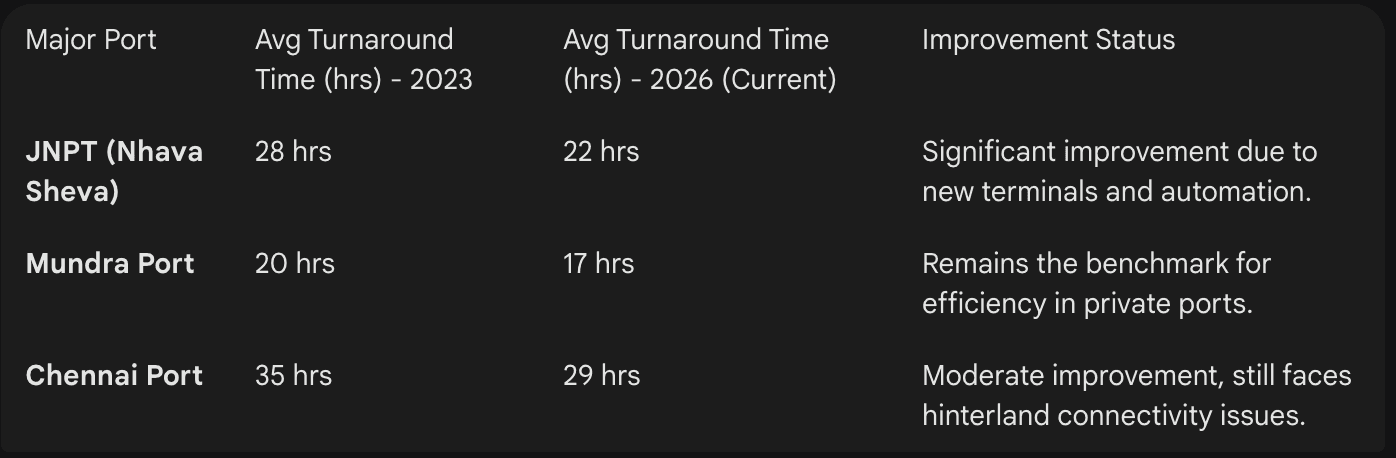
The congestion that once plagued ports like Nhava Sheva (JNPT) is being aggressively tackled through infrastructure upgrades and privatization of terminals.
In 2026, the focus is on the massive expansion at Mundra and the continued development of the deep-draft vadhavan Port. But it's not just about size; it's about velocity. The integration of new automated terminal operating systems is drastically reducing dwell times.

Digitalization: The ULIP Advantage
The most practical improvement for daily operations when shipping to India is the maturation of the Unified Logistics Interface Platform (ULIP).
Gone are the days of fragmented paperwork across multiple agencies. In 2026, ULIP has successfully integrated data from ports, shipping lines, customs (ICEGATE), and railways. For foreign shippers, this means unprecedented visibility. APIs now allow your freight forwarder's system to "talk" directly to Indian customs platforms, allowing for faster pre-arrival processing and quicker gate-out times upon arrival.
What This Means for Shippers
The outlook for shipping to India in 2026 is optimistic but requires adaptation. The hardware (ports) is improving rapidly, and the software (ULIP) is making transparency possible. By leveraging these digital tools and keeping an eye on the developing national carrier strategies, international businesses can unlock smoother access to the massive Indian market.
